Body language is a form of non-verbal communication, which consists of body posture, gestures, facial expressions, and eye movements. Humans send and interpret such signals almost entirely subconsciously.
John Borg attests that human communication consists of 93 percent body language and paralinguistic cues, while only 7% of communication consists of words themselves; however, Albert Mehrabian, the researcher whose 1960s work is the source of these statistics, has stated that this is a misunderstanding of the findings (see Misinterpretation of Mehrabian's rule). Others assert that "Research has suggested that between 60 and 70 percent of all meaning is derived from nonverbal behavior."
Body language may provide clues as to the attitude or state of mind of a person. For example, it may indicate aggression, attentiveness, boredom, relaxed state, pleasure, amusement, and intoxication, among many other cues.
Zobrazujú sa príspevky s označením SCIENCE. Zobraziť všetky príspevky
Zobrazujú sa príspevky s označením SCIENCE. Zobraziť všetky príspevky
sobota 7. januára 2012


Gas Discharge Visualization technique and Kirlian Energy
Kirlian photography refers to a form of photogram made with electricity. It is named after Semyon Kirlian, who in 1939 accidentally discovered that if an object on a photographic plate is connected to a source of voltage an image is produced on the photographic plate.
Kirlian's work, from 1939 onward, involved an independent rediscovery of a phenomenon and technique variously called "electrography", "electrophotography" and "corona discharge photography." The Kirlian technique is contact photography, in which the subject is in direct contact with a film placed upon a charged metal plate.
Current research continues by Dr. Konstantin Korotkov in the Russian University, St. Petersburg State Technical University of Informational Technologies, Mechanics and Optics. Dr. Korotkov has published several books. He uses GDV (Gas Discharge Visualization) based on the Kirlian Effect. GDV instruments use glass electrodes to create a pulsed electrical field excitation (called "perturbation technique") to measure electro-photonic glow.
This is a playlist (5 videos, 40 minutes) about the GDV technique:
Wikipedia:
http://en.wikipedia.org/wiki/Gas_Discharge_Visualization
(Same: http://en.wikipedia.org/wiki/Kirlian_photography)
Kirlian's work, from 1939 onward, involved an independent rediscovery of a phenomenon and technique variously called "electrography", "electrophotography" and "corona discharge photography." The Kirlian technique is contact photography, in which the subject is in direct contact with a film placed upon a charged metal plate.
Current research continues by Dr. Konstantin Korotkov in the Russian University, St. Petersburg State Technical University of Informational Technologies, Mechanics and Optics. Dr. Korotkov has published several books. He uses GDV (Gas Discharge Visualization) based on the Kirlian Effect. GDV instruments use glass electrodes to create a pulsed electrical field excitation (called "perturbation technique") to measure electro-photonic glow.
This is a playlist (5 videos, 40 minutes) about the GDV technique:
Wikipedia:
http://en.wikipedia.org/wiki/Gas_Discharge_Visualization
(Same: http://en.wikipedia.org/wiki/Kirlian_photography)
utorok 3. januára 2012
Science and Islam
Physicist Jim Al-Khalili travels through Syria, Iran, Tunisia and Spain to tell the story of the great leap in scientific knowledge that took place in the Islamic world between the 8th and 14th centuries.

Its legacy is tangible, with terms like algebra, algorithm and alkali all being Arabic in origin and at the very heart of modern science – there would be no modern mathematics or physics without algebra, no computers without algorithms and no chemistry without alkalis.
For Baghdad-born Al-Khalili this is also a personal journey and on his travels he uncovers a diverse and outward-looking culture, fascinated by learning and obsessed with science.
From the great mathematician Al-Khwarizmi, who did much to establish the mathematical tradition we now know as algebra, to Ibn Sina, a pioneer of early medicine whose Canon of Medicine was still in use as recently as the 19th century, he pieces together a remarkable story of the often-overlooked achievements of the early medieval Islamic scientists.
Episode 1: The Language of Science
Episode 2: The Empire of Reason
Episode 3: The Power of Doubt

Its legacy is tangible, with terms like algebra, algorithm and alkali all being Arabic in origin and at the very heart of modern science – there would be no modern mathematics or physics without algebra, no computers without algorithms and no chemistry without alkalis.
For Baghdad-born Al-Khalili this is also a personal journey and on his travels he uncovers a diverse and outward-looking culture, fascinated by learning and obsessed with science.
From the great mathematician Al-Khwarizmi, who did much to establish the mathematical tradition we now know as algebra, to Ibn Sina, a pioneer of early medicine whose Canon of Medicine was still in use as recently as the 19th century, he pieces together a remarkable story of the often-overlooked achievements of the early medieval Islamic scientists.
Episode 1: The Language of Science
Episode 2: The Empire of Reason
Episode 3: The Power of Doubt
pondelok 2. januára 2012
Human Body: Pushing The Limits
4 videos / 4 hours

Episode 1: Strength
The human body is engineered for strength, power and endurance. Bone is sturdy as concrete but flexible enough to resist breaking and light enough to allow us to be quicker off the mark than a racehorse. Our muscles, ligaments and joints have far greater strength and endurance than we know. In this episode, we feature extraordinary tales of human strength told with stunning see-through "anatomy in motion."
• A young man is sucked up into a tornado, only to be spat out a quarter of a mile away, unharmed.
• Pinned by a massive boulder, a climber finds the strength to lift it off in a seemingly impossible muscular feat.
• A college football player sustains what would normally be unbearable injury and pain, yet has the mental stamina to continue playing at full output.
Plus, how does a swimmer tap the remnants of our distant ancestors' extraordinary stamina to swim across the English Channel in 14 hours? How do marathon runners keep the pace on their grueling 26-mile run?
Episode 2: Sight
Sight is the king of the senses. More than 80 percent of what we know of the world comes through our eyes -- without our sight we're lost. In this episode, we reveal the inner workings of our visual system as they've never been seen before, vividly confirming that ancient human adaptations prove no less crucial in modern life. The astounding hidden powers in our eyes are brought to life by true stories including:
• A patrolman relies on the power of sight as he risks his life in a high-speed chase of a murder suspect.
• A firefighter crawls through thick smoke in a burning building to seek survivors using innate night vision and clues decoded by his brain's vision center.
• A lifeguard applies his remarkable skills of pattern recognition to spot one drowning man amid thousands at the beach.
Plus, how do magicians fool us with their illusions? What lies behind the mysteries of our dreams? And what new powers will be discovered by the latest scientific breakthroughs enabling doctors to plug a camera directly into the brain?
Episode 3: Sensation
Less than one-twentieth of an inch below the surface of the skin are the "antennae" that allow us to sense the world around us. This vital layer is the gateway to the original information superhighway -- the nervous system. Millions of nerves carry sensations across the body and up to the brain at hundreds of miles an hour. But our nervous system also has abilities almost beyond imagining. Here is the story of the human body's crucial communications network as never seen before:
• When a father and daughter are stranded without water in the scorched Australian outback, a countdown to their death begins until their nerves trigger hidden survival systems.
• Rapid response wiring in his body allows a Coast Guard helicopter pilot to control his machine with amazing precision, even in storm-strength winds.
• A life of intense training and mental discipline allows Shaolin monks to endure powerful blows to their bodies without even blinking.
Plus, how can we move our fingers faster than we can think? How can you master the polygraph? What exactly is pain, and how do some control it?
Episode 4: Brain power
The driving force behind every one of us is the most powerful organ in the natural world: the human brain. Our central processing unit generates as many electrical impulses in a single day as all the telephones in the world combined. With new state-of-the-art imagery of this complex, mysterious machine, we reveal how our brain accelerates when faced with intense stress or danger, and taps into its deepest layers to unlock prehistoric survival instincts.
• NASCAR driver Clint Bowyer tells us about making split-second decisions in the heat and stress of a 400-lap race.
• Desperate firefighters, trapped by the intense heat of a forest fire, find out how the brain can take charge without waiting for conscious control.
• A lone explorer, piloting a balloon over the Arctic, pushes himself to the limits of sleep deprivation. It nearly costs him his life.
Plus, learn about the extraordinary ways our brains can re-tune our system when starvation threatens, and how sleep and dreams can unleash unseen powers in our mind.

Episode 1: Strength
The human body is engineered for strength, power and endurance. Bone is sturdy as concrete but flexible enough to resist breaking and light enough to allow us to be quicker off the mark than a racehorse. Our muscles, ligaments and joints have far greater strength and endurance than we know. In this episode, we feature extraordinary tales of human strength told with stunning see-through "anatomy in motion."
• A young man is sucked up into a tornado, only to be spat out a quarter of a mile away, unharmed.
• Pinned by a massive boulder, a climber finds the strength to lift it off in a seemingly impossible muscular feat.
• A college football player sustains what would normally be unbearable injury and pain, yet has the mental stamina to continue playing at full output.
Plus, how does a swimmer tap the remnants of our distant ancestors' extraordinary stamina to swim across the English Channel in 14 hours? How do marathon runners keep the pace on their grueling 26-mile run?
Episode 2: Sight
Sight is the king of the senses. More than 80 percent of what we know of the world comes through our eyes -- without our sight we're lost. In this episode, we reveal the inner workings of our visual system as they've never been seen before, vividly confirming that ancient human adaptations prove no less crucial in modern life. The astounding hidden powers in our eyes are brought to life by true stories including:
• A patrolman relies on the power of sight as he risks his life in a high-speed chase of a murder suspect.
• A firefighter crawls through thick smoke in a burning building to seek survivors using innate night vision and clues decoded by his brain's vision center.
• A lifeguard applies his remarkable skills of pattern recognition to spot one drowning man amid thousands at the beach.
Plus, how do magicians fool us with their illusions? What lies behind the mysteries of our dreams? And what new powers will be discovered by the latest scientific breakthroughs enabling doctors to plug a camera directly into the brain?
Episode 3: Sensation
Less than one-twentieth of an inch below the surface of the skin are the "antennae" that allow us to sense the world around us. This vital layer is the gateway to the original information superhighway -- the nervous system. Millions of nerves carry sensations across the body and up to the brain at hundreds of miles an hour. But our nervous system also has abilities almost beyond imagining. Here is the story of the human body's crucial communications network as never seen before:
• When a father and daughter are stranded without water in the scorched Australian outback, a countdown to their death begins until their nerves trigger hidden survival systems.
• Rapid response wiring in his body allows a Coast Guard helicopter pilot to control his machine with amazing precision, even in storm-strength winds.
• A life of intense training and mental discipline allows Shaolin monks to endure powerful blows to their bodies without even blinking.
Plus, how can we move our fingers faster than we can think? How can you master the polygraph? What exactly is pain, and how do some control it?
Episode 4: Brain power
The driving force behind every one of us is the most powerful organ in the natural world: the human brain. Our central processing unit generates as many electrical impulses in a single day as all the telephones in the world combined. With new state-of-the-art imagery of this complex, mysterious machine, we reveal how our brain accelerates when faced with intense stress or danger, and taps into its deepest layers to unlock prehistoric survival instincts.
• NASCAR driver Clint Bowyer tells us about making split-second decisions in the heat and stress of a 400-lap race.
• Desperate firefighters, trapped by the intense heat of a forest fire, find out how the brain can take charge without waiting for conscious control.
• A lone explorer, piloting a balloon over the Arctic, pushes himself to the limits of sleep deprivation. It nearly costs him his life.
Plus, learn about the extraordinary ways our brains can re-tune our system when starvation threatens, and how sleep and dreams can unleash unseen powers in our mind.
Brain - The Secret You
With the help of a hammer-wielding scientist, Jennifer Aniston and a general anaesthetic, Professor Marcus du Sautoy goes in search of answers to one of science’s greatest mysteries: how do we know who we are?

While the thoughts that make us feel as though we know ourselves are easy to experience, they are notoriously difficult to explain. So, in order to find out where they come from, Marcus subjects himself to a series of probing experiments.
He learns at what age our self-awareness emerges and whether other species share this trait. Next, he has his mind scrambled by a cutting-edge experiment in anesthesia.
Having survived that ordeal, Marcus is given an out-of-body experience in a bid to locate his true self. And in Hollywood, he learns how celebrities are helping scientists understand the microscopic activities of our brain.
Finally, he takes part in a mind-reading experiment that both helps explain and radically alters his understanding of who he is.
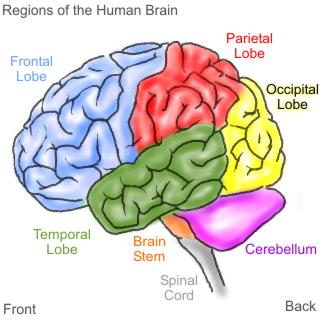
While the thoughts that make us feel as though we know ourselves are easy to experience, they are notoriously difficult to explain. So, in order to find out where they come from, Marcus subjects himself to a series of probing experiments.
He learns at what age our self-awareness emerges and whether other species share this trait. Next, he has his mind scrambled by a cutting-edge experiment in anesthesia.
Having survived that ordeal, Marcus is given an out-of-body experience in a bid to locate his true self. And in Hollywood, he learns how celebrities are helping scientists understand the microscopic activities of our brain.
Finally, he takes part in a mind-reading experiment that both helps explain and radically alters his understanding of who he is.
Brain Story
Why do we think and feel as we do? For years man has sought to understand the workings of the mind. Now, with advances in modern-day technology and developments in neuroscience, a whole new world of brain research is opening up.
Understanding our minds is becoming a reality. Guided by top neuroscientist Susan Greenfield, Brain Story attempts to answer the question “What is my mind and who am I?” We talk to philosophers, clinicians, neurosurgeons and their patients to discover quite what a finely balanced and complex machine the brain is.
6 episodes / 9 videos (playlist – 4 hours, 54 minutes)
All in the Mind. Susan Greenfield explains why she believes all aspects of human experience will eventually be explained in terms of the physical processes of the brain. The story of how we have gradually come to understand the astonishing complexity of the brain is revealed, from the earliest crude studies of the effects of brain injury, through to the latest insights from direct stimulation of specific areas in patients undergoing brain surgery whilst wide awake. Is it possible that our most spiritual feelings are merely the result of electrical activity in the temporal lobe?
In the Heat of the Moment. Where do emotions come from? Why do they feel so different from thoughts? Susan Greenfield looks at some of the old attempts to explain emotion in terms of brain areas and explains why she believes the answer must lie in the biochemistry of the brain – all the hundreds of chemical neurotransmitters which bathe the nerves.
The Mind’s Eye. The illusion of vision. It feels as though we open our eyes and just see what’s out there, but the more we learn about the brain’s visual system, the further it seems this is from the truth. Patients who can’t see movement or recognize faces, reveal the tricks and short cuts the brain uses to construct an illusion of reality. Is the brain making up so much of what we think we’re seeing that vision is really just dreaming with your eyes open?
First Among Equals. What is it about brains that has put us in charge of the planet? Were have humans’ unique linguistic abilities come from? Are there special structures in our brains which no other animals possess? Or is it possible that our sophisticated rich cultures are merely the result of having larger brains? Susan Greenfield explains why she believes we are truly just big-brained chimps.
Growing the Mind. The changes in the brain during the growth and development of a baby into an adult are explored. Susan Greenfield looks at how little of the fine structure of our brains is predetermined at birth, how the connections between nerves are constantly changing in response to what we encounter in the outside world. She explains her view that learning, memory and even the process of becoming a unique individual, should all be seen as a restless brain adapting minute by minute to the environment it encounters. Life is about how the world leaves its mark on us.
The Final Mystery. How do our brains generate consciousness? We take it for granted that the brain makes being alive feel the way it does, but there’s no reason why it should.The brain is made of the same biological ingredients as the rest of the body, and yet somehow it manages to generate the indescribable phenomenon of consciousness. Consciousness is far more than just being able to imagine; it’s a whole extra dimension.
Related Wikipedia articles:
http://en.wikipedia.org/wiki/Amygdala
http://en.wikipedia.org/wiki/Cingulate_cortex
http://en.wikipedia.org/wiki/Hypocampus
Understanding our minds is becoming a reality. Guided by top neuroscientist Susan Greenfield, Brain Story attempts to answer the question “What is my mind and who am I?” We talk to philosophers, clinicians, neurosurgeons and their patients to discover quite what a finely balanced and complex machine the brain is.
6 episodes / 9 videos (playlist – 4 hours, 54 minutes)
All in the Mind. Susan Greenfield explains why she believes all aspects of human experience will eventually be explained in terms of the physical processes of the brain. The story of how we have gradually come to understand the astonishing complexity of the brain is revealed, from the earliest crude studies of the effects of brain injury, through to the latest insights from direct stimulation of specific areas in patients undergoing brain surgery whilst wide awake. Is it possible that our most spiritual feelings are merely the result of electrical activity in the temporal lobe?
In the Heat of the Moment. Where do emotions come from? Why do they feel so different from thoughts? Susan Greenfield looks at some of the old attempts to explain emotion in terms of brain areas and explains why she believes the answer must lie in the biochemistry of the brain – all the hundreds of chemical neurotransmitters which bathe the nerves.
The Mind’s Eye. The illusion of vision. It feels as though we open our eyes and just see what’s out there, but the more we learn about the brain’s visual system, the further it seems this is from the truth. Patients who can’t see movement or recognize faces, reveal the tricks and short cuts the brain uses to construct an illusion of reality. Is the brain making up so much of what we think we’re seeing that vision is really just dreaming with your eyes open?
First Among Equals. What is it about brains that has put us in charge of the planet? Were have humans’ unique linguistic abilities come from? Are there special structures in our brains which no other animals possess? Or is it possible that our sophisticated rich cultures are merely the result of having larger brains? Susan Greenfield explains why she believes we are truly just big-brained chimps.
Growing the Mind. The changes in the brain during the growth and development of a baby into an adult are explored. Susan Greenfield looks at how little of the fine structure of our brains is predetermined at birth, how the connections between nerves are constantly changing in response to what we encounter in the outside world. She explains her view that learning, memory and even the process of becoming a unique individual, should all be seen as a restless brain adapting minute by minute to the environment it encounters. Life is about how the world leaves its mark on us.
The Final Mystery. How do our brains generate consciousness? We take it for granted that the brain makes being alive feel the way it does, but there’s no reason why it should.The brain is made of the same biological ingredients as the rest of the body, and yet somehow it manages to generate the indescribable phenomenon of consciousness. Consciousness is far more than just being able to imagine; it’s a whole extra dimension.
Related Wikipedia articles:
http://en.wikipedia.org/wiki/Amygdala
http://en.wikipedia.org/wiki/Cingulate_cortex
http://en.wikipedia.org/wiki/Hypocampus
Elegant Universe with Brian Greene
Eleven dimensions, parallel universes, and a world made out of strings? It's not science fiction, it's string theory. Bestselling author and physicist Brian Greene offers a tour of this seemingly strange world in "The Elegant Universe," a three-hour Peabody Award-winning miniseries.
3 videos / 3 hours
3 videos / 3 hours
Episode 1: Einstein's Dream - The Elegant Universe - PBS NOVA
Episode 2: String's The Thing - The Elegant Universe - PBS NOVA
Episode 3: Welcome to the 11th Dimension - The Elegant Universe - PBS NOVA
Prihlásiť na odber:
Príspevky (Atom)