Neil Oliver tells the epic story of how Britain and its people came to be over thousands of years of ancient history - the beginnings of our world forged in ice, stone, and bronze.
A History Of Ancient Britain will turn the spotlight onto the very beginning of Britain’s story. From the last retreat of the glaciers 12,000 years ago, until the departure of the Roman Empire in the Fifth Century AD this epic series will reveal how and why these islands and nations of ours developed as they did and why we have become the people we are today. The first series transmits in early 2011 and the following series A History of Celtic Britain in April 2011.
A History of Ancient Britain (1 / 4) - Age of Ice
A History of Ancient Britain (2 / 4) - Age of Ancestors
A History of Ancient Britain (3 / 4) - Age of Cosmology
A History of Ancient Britain (4 / 4) - Age of Bronze
The Russian Empire was a state that existed from 1721 until the Russian Revolution of 1917. It was the successor to the Tsardom of Russia and the predecessor of the Soviet Union. It was one of the largest empires in world history, surpassed in landmass only by the British and Mongolian empires: at one point in 1866, it stretched from eastern Europe across Asia and into North America.
At the beginning of the 19th century the Russian Empire extended from the Arctic Ocean in the north to the Black Sea on the south, from the Baltic Sea on the west to the Pacific Ocean on the east. With 125.6 million subjects registered by the 1897 census, it had the third largest population of the world at the time, after Qing China and the British Empire. Like all empires it represented a large disparity in economic, ethnic, and religious positions. Its government, ruled by the Emperor, was the last absolute monarchy in Europe at the time of its demise. Prior to the outbreak of World War I in August 1914 Russia was one of the five major Great Powers of Europe.
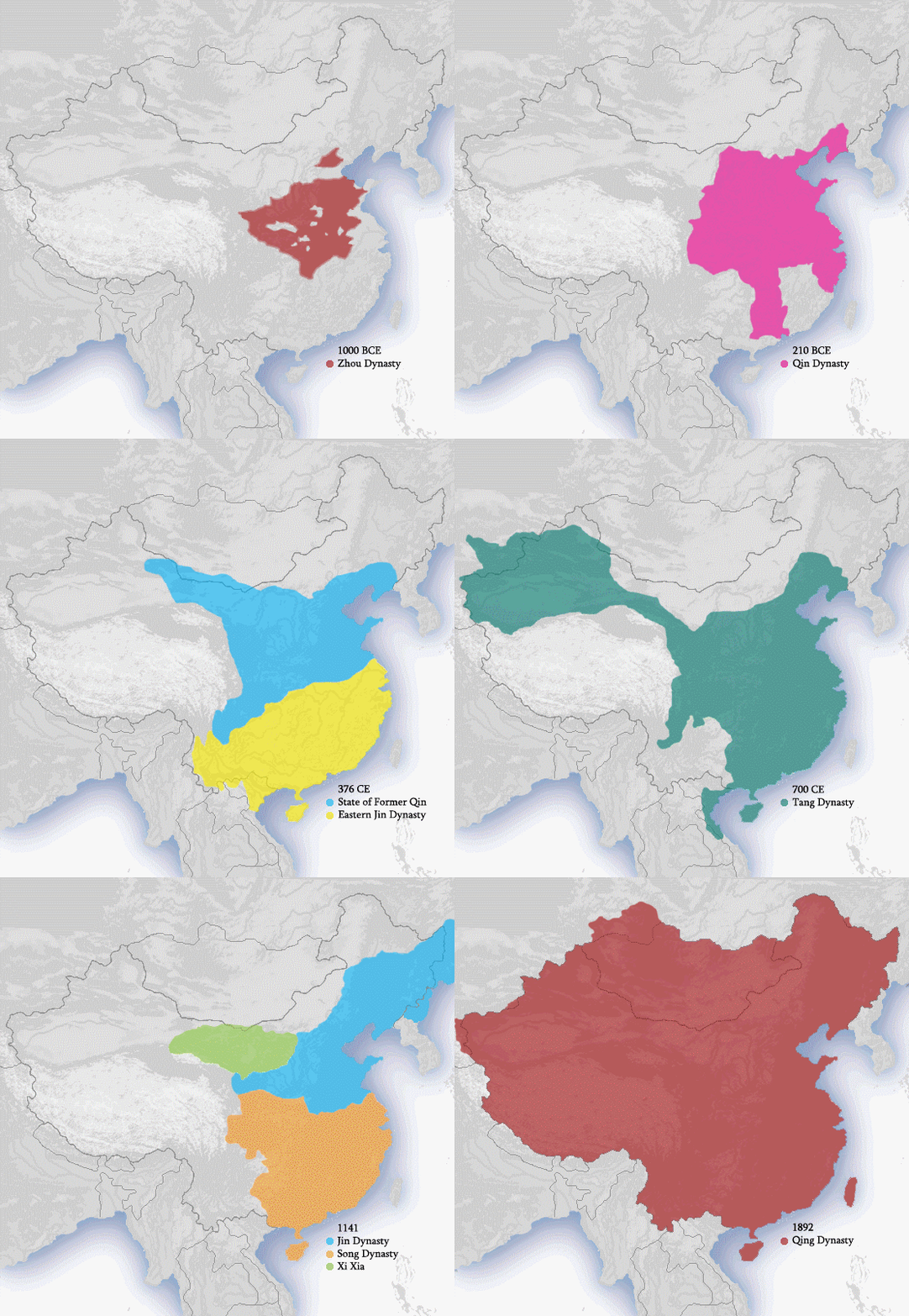
Under the Chin dynasty a strong central government was established; provinces replaced feudal states. The empire was extended into parts of south China. The Great Wall was largely completed, protecting China on the north from the Huns.
The Han dynasty rose to power in 202 B.C., and greatly expanded the empire. Conquests were made in south China, Annam (northern Vietnam), and Korea. The Huns north of the Great Wall were subdued. Han conquests, westward as far as present Afghanistan, brought about trade with the Middle East by way of the Silk Road through Central Asia. China exported vast quantities of silk westward, much of it reaching the Roman Empire.
The Han adopted, for those going into government service, a system of examinations based on the Confucian classics. Scholars edited the classics and discovered and copied many old texts. The first Chinese encyclopedia was compiled. Paper was invented. Buddhism was introduced from India.
The Han dynasty was deposed in 220 A.D. There followed nearly 400 years of divided rule and civil war. During 221-65 China was divided into three separate states Wu, Shu, and Wei traditionally called the Three Kingdoms. The country was reunited in 280 under the Western Chin dynasty, but the state collapsed in 316 following uprisings by various non-Chinese peoples, mainly Turkic, Mongol, and Tibetan. In the south small Chinese states continued to rule. China lost its outlying areas, closing the Silk Road. Political disunity was offset by a general cultural advancement, however. Trade was established with southeast Asia. Buddhism became more prevalent, while interest in Confucianism declined.
Unification of China was achieved by the Sui dynasty (589-618). Under the Sui an extensive system of canals was built, interconnecting the Huang He and the Yangtze River. Chinese control was reestablished over Annam and what is present Chinese Turkestan. Also, the Chinese way of life and system of government began to influence Japan profoundly. Contact was made by way of Korea, where Chinese culture had been dominant since earliest times.
Bread, cash, dosh, dough, loot, lucre, moolah, readies, the wherewithal: Call it what you like, it matters. To Christians, love of it is the root of all evil. To generals, it's the sinews of war. To revolutionaries, it's the chains of labor. But in The Ascent of Money, Niall Ferguson shows that finance is in fact the foundation of human progress. What's more, he reveals financial history as the essential backstory behind all history.
Through Ferguson's expert lens familiar historical landmarks appear in a new and sharper financial focus. Suddenly, the civilization of the Renaissance looks very different: a boom in the market for art and architecture made possible when Italian bankers adopted Arabic mathematics. The rise of the Dutch republic is reinterpreted as the triumph of the world's first modern bond market over insolvent Habsburg absolutism. And the origins of the French Revolution are traced back to a stock market bubble caused by a convicted Scot murderer.
With the clarity and verve for which he is known, Ferguson elucidates key financial institutions and concepts by showing where they came from. What is money? What do banks do? What's the difference between a stock and a bond? Why buy insurance or real estate? And what exactly does a hedge fund do?
This is history for the present. Ferguson travels to post-Katrina New Orleans to ask why the free market can't provide adequate protection against catastrophe. He delves into the origins of the subprime mortgage crisis.
Perhaps most important, The Ascent of Money documents how a new financial revolution is propelling the world's biggest countries, India and China, from poverty to wealth in the space of a single generation—an economic transformation unprecedented in human history.
Yet the central lesson of the financial history is that sooner or later every bubble bursts—sooner or later the bearish sellers outnumber the bullish buyers, sooner or later greed flips into fear. And that's why, whether you're scraping by or rolling in it, there's never been a better time to understand the ascent of money.
Lucifer, Beelzebub, The Beast, Satan... He has been called many names and taken many strange different forms over the ages. So where does the concept of the traditional evil come from? The History of the Devil goes back to the ancient Middle East, even before the Old Testament to find the roots of Satan. The answer is in the ancient Mesopotamia. In Zoroastrianism it was believed that the all-knowing good God was Ahura Mazda, the one Uncreated Creator, and Ahriman was his antithesis, the God of chaos, the dark and evil one. Probably the bases of these teachings like heaven and hell, good and evil were transferred to the other monotheistic religions.
The idea of "God's evil enemy" has been around for thousands of years. While early Christian clerics used the Devil as a symbol of heresy, the concept did not begin with the Christian Bible, but rather in ancient Persia some 3500 year ago. Since then, he has acquired horns, a forked tail and innumerable names in all aspects of world culture as well as a central role in the way we think.
THE HISTORY OF THE DEVIL looks at how our concept of evil, as symbolized by the Devil, has evolved over the centuries to fit the needs of government, churches, demagogues and opportunists everywhere.
The idea of a single devine being - God, Yahweh, Allah - has existed for over 4,000 years. But the history of God is also the history of human struggle. While Judaism, Islam and Christianity proclaim the goodness of God, organised religion has too often been the catalyst for violence and ineradicable prejudice.
In this fascinating, extensive and original account of the evolution of belief, Karen Armstrong examines Western socitety's unerring fidelity to this idea of One God and the many conflicting convictions it engenders. A controversial, extraordinary story of worship and war, A History of God confronts the most fundamental fact - or fiction - of our lives.
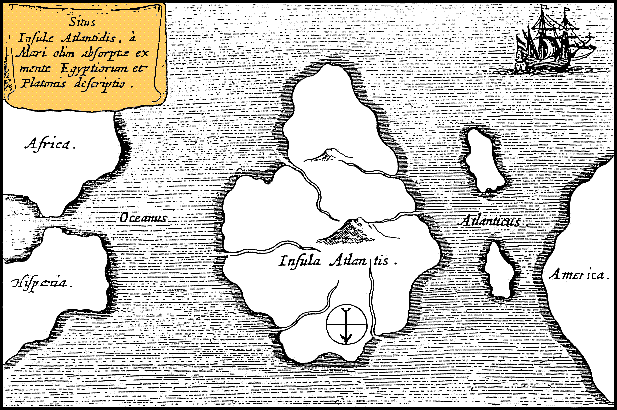
Atlantis is a legendary island first mentioned in Plato's dialogues Timaeus and Critias, written about 360 BC. According to Plato, Atlantis was a naval power lying "in front of the Pillars of Hercules" that conquered many parts of Western Europe and Africa 9,000 years before the time of Solon, or approximately 9600 BC. After a failed attempt to invade Athens, Atlantis sank into the ocean "in a single day and night of misfortune".
They defended the Holy Land for 200 years before a fall from grace. Now watch as the archaeologist unearth their city of Tortosa, now in the suburbs of modern day Tartus in Syria.
Freemasonry is a fraternal organisation that arose from obscure origins in the late 16th to early 17th century. Freemasonry now exists in various forms all over the world, with a membership estimated at around six million, including approximately 150,000 under the jurisdictions of the Grand Lodge of Scotland and Grand Lodge of Ireland, over a quarter of a million under the jurisdiction of the United Grand Lodge of England and just under two million in the United States.
Freemasonry is a fraternal organisation that arose from obscure origins in the late 16th to early 17th century. Freemasonry now exists in various forms all over the world, with a membership estimated at around six million, including approximately 150,000 under the jurisdictions of the Grand Lodge of Scotland and Grand Lodge of Ireland, over a quarter of a million under the jurisdiction of the United Grand Lodge of England and just under two million in the United States.
This explores the popular theories & little-known history behind the World's oldest secret society the Freemasons.
As much of the world descended into the dark ages after the fall of Rome, one civilization shone brilliantly: the Byzantine Empire. With ruthless might and supreme ingenuity the Byzantines ruled over vast swaths of Europe and Asia for more than a thousand years. The Byzantines constructed the ancient world's longest aqueduct, virtually invincible city walls, a massive stadium, and a colossal domed cathedral that defied the laws of nature.
After the fall of Rome, Italy fell into a dark sleep, and wasn't reawakened until the 11th century. Autonomous city-states emerged and these tiny republics began to revitalize their cities and build on a massive level not witnessed since the rise of Rome. In the late 15th and 16th centuries, alliances among various city-states continually shifted as foreign superpowers tried to sink their claws into Italy. The masters who are best known for creating the works of art and architecture of the Renaissance, were also the greatest military and civil engineers of the time.
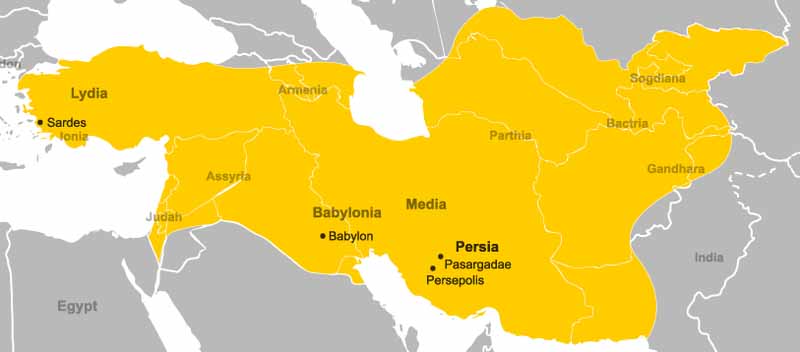
The Persian Empire was one of the most mysterious civilizations in the ancient world. Persia became an empire under the Cyrus the Great, who created a policy of religious and cultural tolerance that became the hallmark of Persian rule. Engineering feats include an innovative system of water management; a cross-continent paved roadway stretching 1500 miles; a canal linking the Nile to the Red Sea; and the creation of one of the Seven Wonders of the World, the Mausoleum of Maussollos.
The rivalry between Persia and Athens led to a 30-year war known as the Persian Wars, the outcome of which helped create the world we live in today. Peter Weller hosts.
Spartacus (c. 109 BC - 71 BC), according to Roman historians, was a slave and a gladiator who became a leader (or possibly one of several leaders) in the somewhat successful slave uprising against the Roman Republic known as the Third Servile War. Little is known about Spartacus beyond the events of the war, and surviving historical accounts are inaccurate and often contradictory.
In 480 B.C, during the Greco-Persian Wars the Persian Empire led by Xerxes I of Persia fought the Greek city-states forces at the pass of Thermopylae in central Greece. This battle become known as the Battle of Thermopylae.
The only thing stopping the Persians, was an army led by King Leonidas I & his 300 Spartans, the greatest soldiers the world has ever known. Vastly outnumbered, the Greek Spartans held up the Persians advance for three days, until they were overrun by Persian forces. The film also focus on the lead up to the Battle of Thermopylae revealing that the Greeks might have played a part in the Ionian Revolts in Asia Minor in 499 to 493 B.C.
Its brings its viewers into understanding ancient warfare when the documentary focus on the naval battle around Thermopylae, strategic & tactical considerations, and the aftermath of the battle which lead to the burning of Athens and Greek victories in battles such as Plataea. It also reveals to those unaware that the Spartans didn't fight alone.
Three cities dominated the ancient world: Athens, Rome and a third, now almost forgotten. It lies hidden beneath the waters of the Mediterranean and a sprawling modern metropolis.
Alexandria was a city built on a dream; a place with a very modern mindset, where - as with the worldwide web - one man had a vision that all knowledge on earth could be stored in one place.
Bettany Hughes goes in search of this lost civilisation, revealing the story of a city founded out of the desert by Alexander the Great in 331 BC to become the world's first global centre of culture, into which wealth and knowledge poured from across the world.
Until its decline in the fourth and fifth Centuries AD, Alexandria became a crucible of learning; Hughes uncovers the incredible discoveries and the technical achievements of this culture.
The film's cast of characters reads like a list of the greatest figures of ancient times: political figures like Alexander the Great, Julius Caesar and Cleopatra, and intellectuals including female mathematician, astronomer and philosopher Hypatia, Euclid, Archimedes, Eratosthenes and Ptolemy.
At last, after 1,500 years squashed under a modern metropolis, new clues are emerging from the earth to the real nature of this grand experiment in human civilization.
Once exclusively reserved for study by ultra-religious male scholars of Judaism, Kabbalah has recently become known as a multi-million dollar, celebrity-endorsed phenomenon.
SECRETS OF KABBALAH strips away the hype and demystifies the writings that have been studied by Jewish scholars for thousands of years. Is the Kabbalah of the stars the same Kabbalah that Jewish scholars have studied for generations? Even as more and more people are seen wearing the red string bracelets associated with Kabbalah, the original teachings behind this seemingly new fad are in fact understood by precious few.
Physicist Jim Al-Khalili travels through Syria, Iran, Tunisia and Spain to tell the story of the great leap in scientific knowledge that took place in the Islamic world between the 8th and 14th centuries.
Its legacy is tangible, with terms like algebra, algorithm and alkali all being Arabic in origin and at the very heart of modern science – there would be no modern mathematics or physics without algebra, no computers without algorithms and no chemistry without alkalis.
For Baghdad-born Al-Khalili this is also a personal journey and on his travels he uncovers a diverse and outward-looking culture, fascinated by learning and obsessed with science.
From the great mathematician Al-Khwarizmi, who did much to establish the mathematical tradition we now know as algebra, to Ibn Sina, a pioneer of early medicine whose Canon of Medicine was still in use as recently as the 19th century, he pieces together a remarkable story of the often-overlooked achievements of the early medieval Islamic scientists.
From a small Italian community in 15th-century Florence, the Medici family would rise to rule Europe in many ways. Using charm, patronage, skill, duplicity and ruthlessness, they would amass unparalleled wealth and unprecedented power.
They would also ignite the most important cultural and artistic revolution in Western history–the European Renaissance. But the forces of change the Medici helped unleash would one day topple their ordered world. An epic drama played out in the courts, cathedrals and palaces of Europe, this series is both the tale of one family’s powerful ambition and of Europe’s tortured struggle to emerge from the ravages of the dark ages.
A tale of one family’s powerful ambition and of Europe’s struggle to emerge from the ravages of the Dark Ages. Beginning in the 14th century, The Medici used charm, skill and ruthlessness to garner unparalleled wealth and power. Standing at the helm of the Renaissance, they ruled Europe for more than 300 years and inspired the great artists, scientists and thinkers who gave birth to the modern world.
Episode 1: Birth of a Dynasty
Wealthy Florentine banker Cosimo de' Medici's search of Europe for relics of antiquity sparks classical learning and inventive thinking.
Episode 2: Magnificent Medici
Lorenzo de' Medici becomes a driving force of the Renaissance; monk Savonarola promotes fundamentalist purification of Florence after the death of Lorenzo de' Medici.
Episode 3: Medici Popes
Giovanni de' Medici becomes Pope Leo X in 1513 and begins to sell indulgences to restore papal funds; Martin Luther protests the selling of indulgences.
Episode 4: Power vs Truth
Giorgio Vasari writes a book to define the Renaissance; Galileo pursues his scientific studies with the support of the Medici family.
What is Islam? Who is Muhammad? This is the first of 3 part documentary narrated by Ben Kingsley about Islam and attempts to answer these questions. This part deals with the life of the Prophet Muhammad, his early life, his encounter with God Almighty and the birth of the Islam.
Islam would become the revitalizing force of a barbaric Arabia, returning people to God and bringing back the monotheistic message of Christianity and Judaism in its most powerful way. Islam Women were given rights over there husbands, racism was annihilated and the rich were made equal to the poor.






.svg)


