Zobrazujú sa príspevky s označením engineering an empire. Zobraziť všetky príspevky

streda 11. januára 2012

Engineering an Empire: Russia


The Russian Empire was a state that existed from 1721 until the Russian Revolution of 1917. It was the successor to the Tsardom of Russia and the predecessor of the Soviet Union. It was one of the largest empires in world history, surpassed in landmass only by the British and Mongolian empires: at one point in 1866, it stretched from eastern Europe across Asia and into North America.


At the beginning of the 19th century the Russian Empire extended from the Arctic Ocean in the north to the Black Sea on the south, from the Baltic Sea on the west to the Pacific Ocean on the east. With 125.6 million subjects registered by the 1897 census, it had the third largest population of the world at the time, after Qing China and the British Empire. Like all empires it represented a large disparity in economic, ethnic, and religious positions. Its government, ruled by the Emperor, was the last absolute monarchy in Europe at the time of its demise. Prior to the outbreak of World War I in August 1914 Russia was one of the five major Great Powers of Europe.


Wikipedia:
http://en.wikipedia.org/wiki/History_of_Russia

Engineering an Empire: China


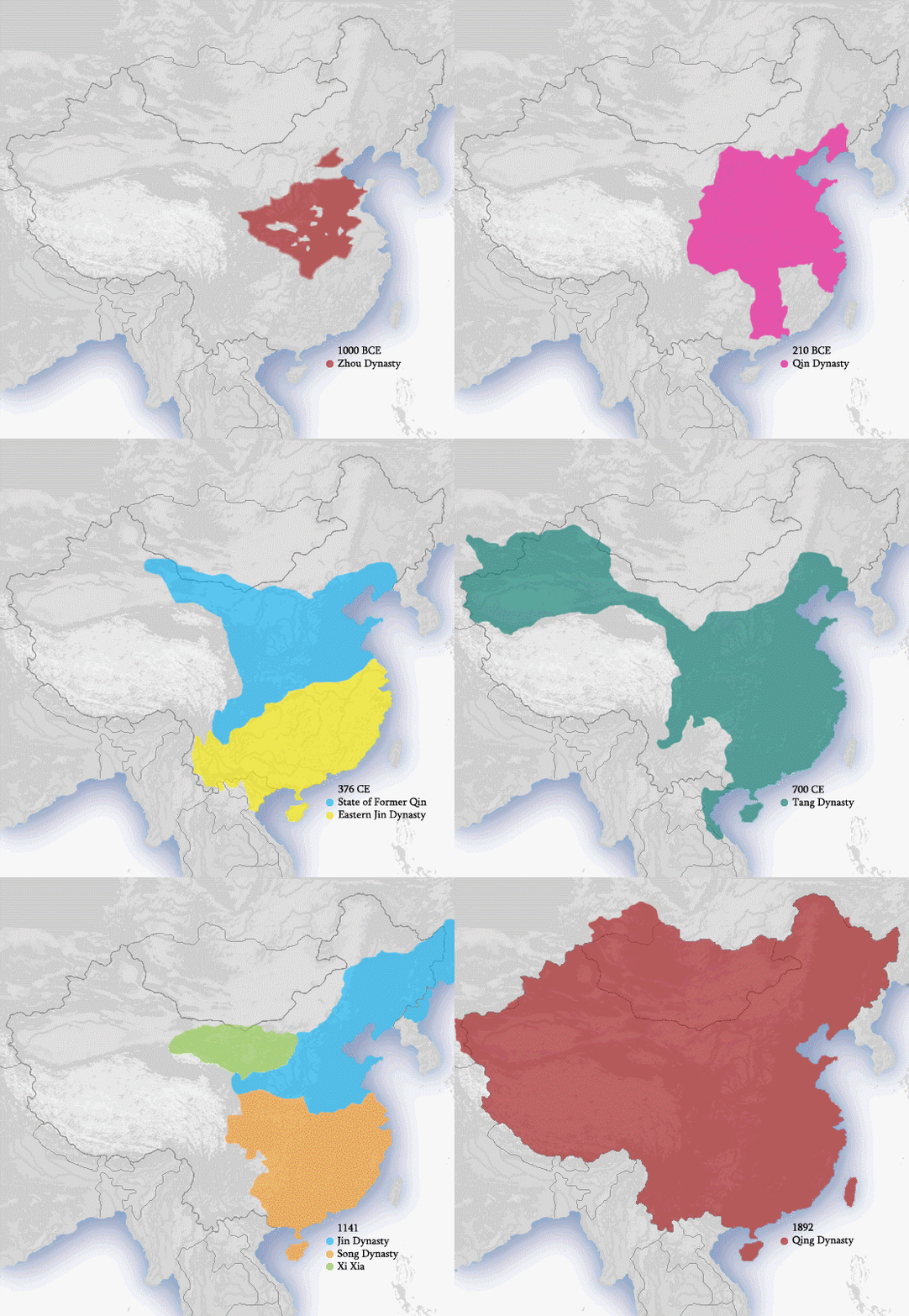
Under the Chin dynasty a strong central government was established; provinces replaced feudal states. The empire was extended into parts of south China. The Great Wall was largely completed, protecting China on the north from the Huns.


The Han dynasty rose to power in 202 B.C., and greatly expanded the empire. Conquests were made in south China, Annam (northern Vietnam), and Korea. The Huns north of the Great Wall were subdued. Han conquests, westward as far as present Afghanistan, brought about trade with the Middle East by way of the Silk Road through Central Asia. China exported vast quantities of silk westward, much of it reaching the Roman Empire.

The Han adopted, for those going into government service, a system of examinations based on the Confucian classics. Scholars edited the classics and discovered and copied many old texts. The first Chinese encyclopedia was compiled. Paper was invented. Buddhism was introduced from India.

The Han dynasty was deposed in 220 A.D. There followed nearly 400 years of divided rule and civil war. During 221-65 China was divided into three separate states Wu, Shu, and Wei traditionally called the Three Kingdoms. The country was reunited in 280 under the Western Chin dynasty, but the state collapsed in 316 following uprisings by various non-Chinese peoples, mainly Turkic, Mongol, and Tibetan. In the south small Chinese states continued to rule. China lost its outlying areas, closing the Silk Road. Political disunity was offset by a general cultural advancement, however. Trade was established with southeast Asia. Buddhism became more prevalent, while interest in Confucianism declined.

Unification of China was achieved by the Sui dynasty (589-618). Under the Sui an extensive system of canals was built, interconnecting the Huang He and the Yangtze River. Chinese control was reestablished over Annam and what is present Chinese Turkestan. Also, the Chinese way of life and system of government began to influence Japan profoundly. Contact was made by way of Korea, where Chinese culture had been dominant since earliest times.


streda 4. januára 2012

Engineering an Empire: Age of Alexander

438 BC. The Parthenon is complete. This masterpiece is the crowning achievement of a remarkable century for the Greek people. They have enjoyed a burst of creativity rarely seen in the history of mankind. Led by Athens, the world's first democracy, the Greeks charged to new and dazzling heights of accomplishment. Art and form combined with engineering to create some of the most incredible structures ever seen.

The brilliance of their ideas had conquered the world's imagination, but Greece's territorial ambitions were stymied by one civil war after another.

It would take one man's desire for conquest and domination to unify Greece and then vanquish the world. Without Alexander the Great, it is possible Greece's Golden Era would have been just a footnote in history, but Alexander's triumph had its price. The Athenian experiment with democracy had ended and tens of thousands would die during Alexander's relentless attacks on Persia and Egypt. Still, his armies carried Greek life, culture and values far abroad and this empire became known as the "Hellenistic" world. Greece's amazing engineering achievements and ideas are still with us today.

From Pergamon, a city that still stands today as testament to the genius of Greek city planning and engineering, to theaters with acoustics that still amaze sound engineers today, to the world's first lighthouse and one of the seven wonders of the ancient world, this episode will examine the architecture and infrastructure engineered by the Greek Empire.

3 videos / 45 minutes


Wikipedia:

http://en.wikipedia.org/wiki/Alexander_the_Great

Engineering an Empire: The Byzantines

As much of the world descended into the dark ages after the fall of Rome, one civilization shone brilliantly: the Byzantine Empire. With ruthless might and supreme ingenuity the Byzantines ruled over vast swaths of Europe and Asia for more than a thousand years. The Byzantines constructed the ancient world's longest aqueduct, virtually invincible city walls, a massive stadium, and a colossal domed cathedral that defied the laws of nature.


3 videos / 45 minutes


Wikipedia:

http://en.wikipedia.org/wiki/Byzantine_Empire

Engineering an Empire: Da Vinci's World

After the fall of Rome, Italy fell into a dark sleep, and wasn't reawakened until the 11th century. Autonomous city-states emerged and these tiny republics began to revitalize their cities and build on a massive level not witnessed since the rise of Rome. In the late 15th and 16th centuries, alliances among various city-states continually shifted as foreign superpowers tried to sink their claws into Italy. The masters who are best known for creating the works of art and architecture of the Renaissance, were also the greatest military and civil engineers of the time.

3 videos / 45 minutes


Engineering an Empire: The Persians

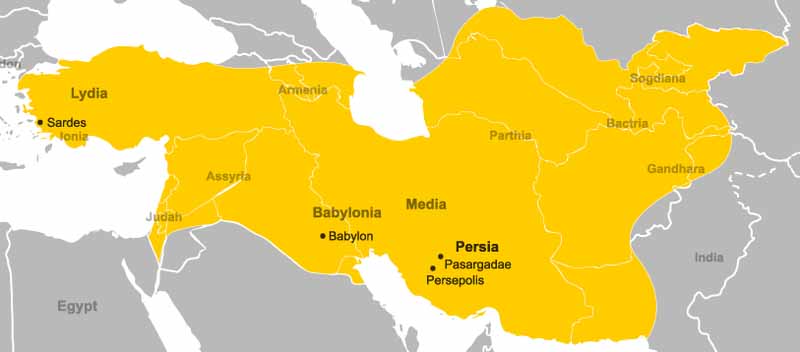
The Persian Empire was one of the most mysterious civilizations in the ancient world. Persia became an empire under the Cyrus the Great, who created a policy of religious and cultural tolerance that became the hallmark of Persian rule. Engineering feats include an innovative system of water management; a cross-continent paved roadway stretching 1500 miles; a canal linking the Nile to the Red Sea; and the creation of one of the Seven Wonders of the World, the Mausoleum of Maussollos.


The rivalry between Persia and Athens led to a 30-year war known as the Persian Wars, the outcome of which helped create the world we live in today. Peter Weller hosts.

3 videos / 45 minutes


utorok 3. januára 2012

Engineering an Empire: Egypt

Five thousand years ago - nearly two millennia before the Romans built their first mud huts - ancient Egypt's mighty pharaohs began commissioning and building monumental masterpieces whose scale, beauty, and sophistication still boggle the mind.


Hosted by actor and art historian Peter Weller, the feature-length EGYPT: ENGINEERING AN EMPIRE explores Egypt's awe-inspiring engineering accomplishments through the prism of its pharaohs' indomitable personalities. As Egypt's pharaohs alternately conquered and ceded vast expanses of land, they pushed their royal architects to stretch the boundaries of imagination and human potential, in effect inventing the science of structural engineering. Follow the empire's development from the First Dynasty of 3000 BC through the last days of the reign of Ramses the Great in 1212 BC, from dazzling obelisks to the 700-foot Great Pyramid of Giza.